Padel racket balance comparison
| Balance | How it feels | Best for | Avoid if |
|---|---|---|---|
| Low | Quick, controlled, arm-friendly | Defense, right side, beginners | You need heavy finishing power |
| Medium | Balanced and adaptable | Most intermediates | You want an extreme specialist feel |
| High | Powerful but slower | Advanced attackers | Your arm gets tired or your volleys are late |
Why balance can matter more than total weight
A lighter high-balance racket can feel slower than a heavier low-balance racket because more mass sits toward the tip. That tip weight is useful on smashes but costly in fast exchanges. Balance is really a measure of where the racket's mass lives, not how much of it there is. For the total-mass side of that equation, see our racket weight guide.
When Luca tests balance, he looks at defensive blocks, first volleys, and the third overhead in a long point, not just the first smash in warmup. The head-heavy feel that seems powerful in the shop is exactly what shows up late as a lagging volley in the second set.
Think of balance and total weight as two dials. Weight sets how much effort the racket takes overall; balance sets where that effort is felt. You can move both, and the smart move is usually to keep weight sensible and let balance do the fine-tuning.
- Late at net? Move lower in balance.
- Easy blocks but weak overheads? Try medium or medium-high balance.
- Clean attacker with good footwork? High balance may be worth the trade-off.
Balance measured in millimeters
Manufacturers rarely print balance clearly, so it helps to know the numbers. Padel balance is measured in millimeters from the butt of the handle to the balance point. Higher numbers mean more weight toward the head.
These ranges are typical rather than absolute, but they give you a shared language when comparing two rackets that both list the same weight.
| Balance | Approx. mm from butt | Feel in hand | Best role |
|---|---|---|---|
| Low | 255-263 mm | Head-light, whippy, fast | Defense, right side, comfort |
| Medium | 264-270 mm | Neutral, adaptable | All-court intermediate play |
| Medium-high | 271-275 mm | Slightly head-forward | Aggressive all-court |
| High | 276-282 mm | Head-heavy, powerful, slower | Advanced attacking overheads |
How to measure balance at home
You do not need lab tools to check a racket's balance. The fulcrum method takes a minute and tells you a surprising amount about why a racket feels the way it does.
Rest the racket across a thin edge, like a pencil or a ruler stood on its side, and slide it until it sits level. Mark that balance point, then measure from the very bottom of the handle to the mark in millimeters. Compare that number against the ranges above to place the racket as low, medium, or high.
Do this with any racket you already own and like. Knowing its balance point in millimeters gives you a reference to shop against, so you are matching a real feel instead of guessing from marketing words.
- Balance level on a pencil edge; mark the balance point.
- Measure from the butt cap to the mark in millimeters.
- Compare against 255-282 mm ranges to classify it.
- Log the number for a racket you like as your baseline.
Balance, shape, and weight together
Balance never acts alone. A 360 g high-balance diamond feels far more demanding than a 370 g low-balance round, because shape, balance, and weight stack their effects. Round shapes usually come low-balance; diamonds usually come high-balance, which is why the shape alone hints at the feel. Our racket shapes guide covers that pairing in more depth.
When you read a spec sheet, read all three together. A light head-heavy racket can still tire your arm; a heavier head-light racket can still feel quick. The number that matters is the combination, not any single figure.
Tuning balance with lead tape
You are not stuck with a racket's factory balance. A few grams of lead tape can shift the feel without buying a new frame, and it is the cheapest way to personalize a racket you mostly like.
Tape near the top of the head raises balance and adds overhead punch and stability. Tape low, near the throat or under the grip, lowers balance and keeps the head quick. Add small amounts, two to four grams at a time, and hit with it before adding more, because a little tape moves the balance point more than people expect.
| Where you add tape | Effect on balance | What you gain | What you risk |
|---|---|---|---|
| Top of the head (12 o'clock) | Raises balance | More overhead power and stability | Slower, more tiring at net |
| Sides of the head (3 and 9) | Slightly raises balance | More twist stability on blocks | Small drop in maneuverability |
| Throat / bottom of head | Neutral to slightly lower | Stability without much head weight | Less noticeable power gain |
| Under the grip / butt | Lowers balance | Faster hands, easier on the arm | Less free power overhead |
Common balance mistakes
The most common error is buying high balance for power and then struggling all match with late volleys and a tired arm. Power you cannot deliver on time is not power. If your footwork does not put you under the smash early, high balance mostly costs you.
The opposite mistake is over-correcting to the lowest balance available and then wondering why the racket feels flimsy against pace. If hard balls twist the head on your blocks, you need a little more mass or head stability, not less. Medium balance exists precisely because most players live between those extremes.
- Do not buy high balance to fix weak overheads if your timing is late.
- Do not go ultra-low balance if hard balls twist the head.
- Do not judge balance in a warmup; judge it in the second set.
Related Reviews
These are the reviews I would open next if this guide describes the decision you are trying to make.
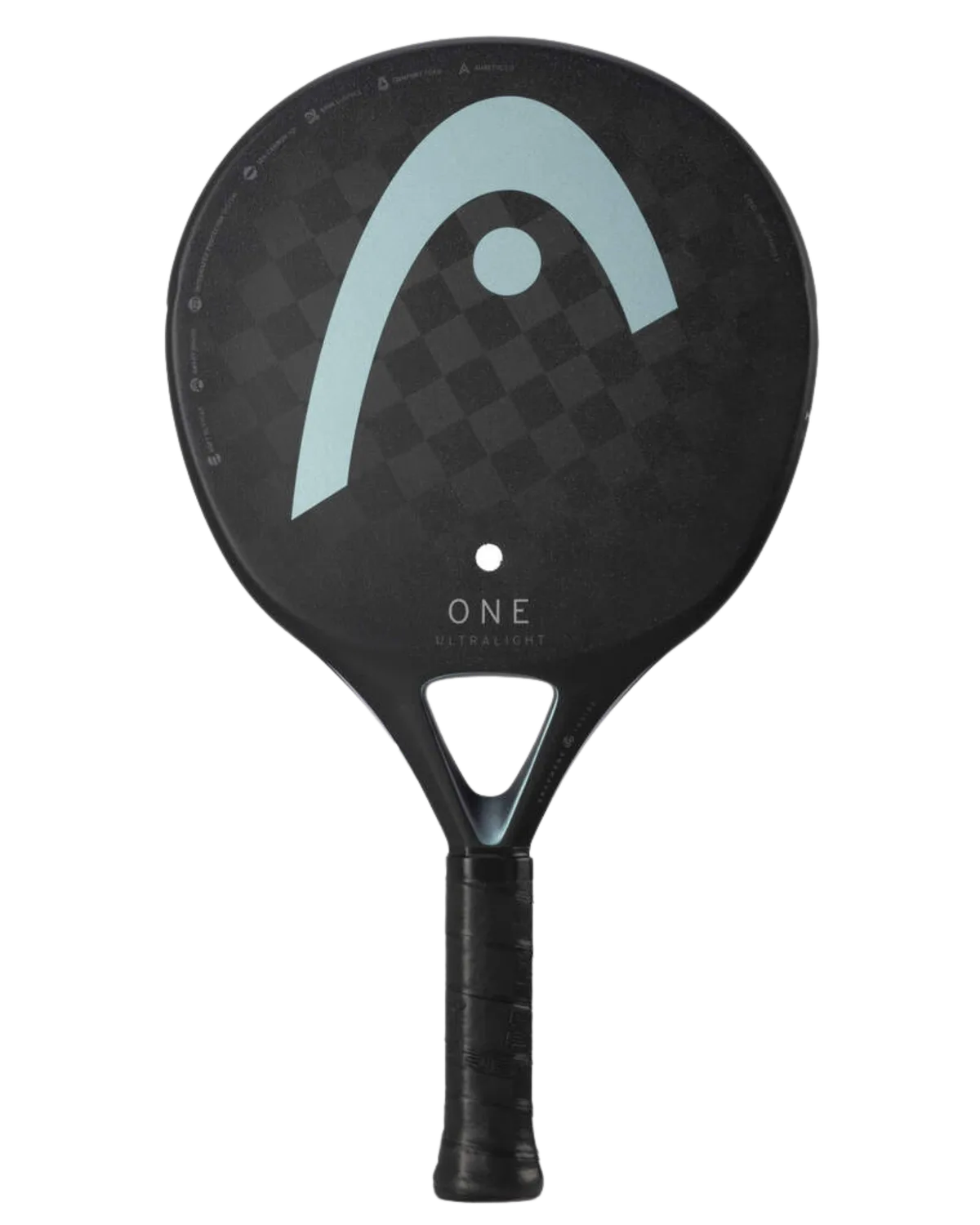
Best ultra-light option
Head One Ultralight Black
A very quick racket for players who want maximum hand speed, easy preparation, and low fatigue.
- Review
- 8.5/10
- Price
- $179.95
- Best for
- Players who get arm fatigue with heavier rackets
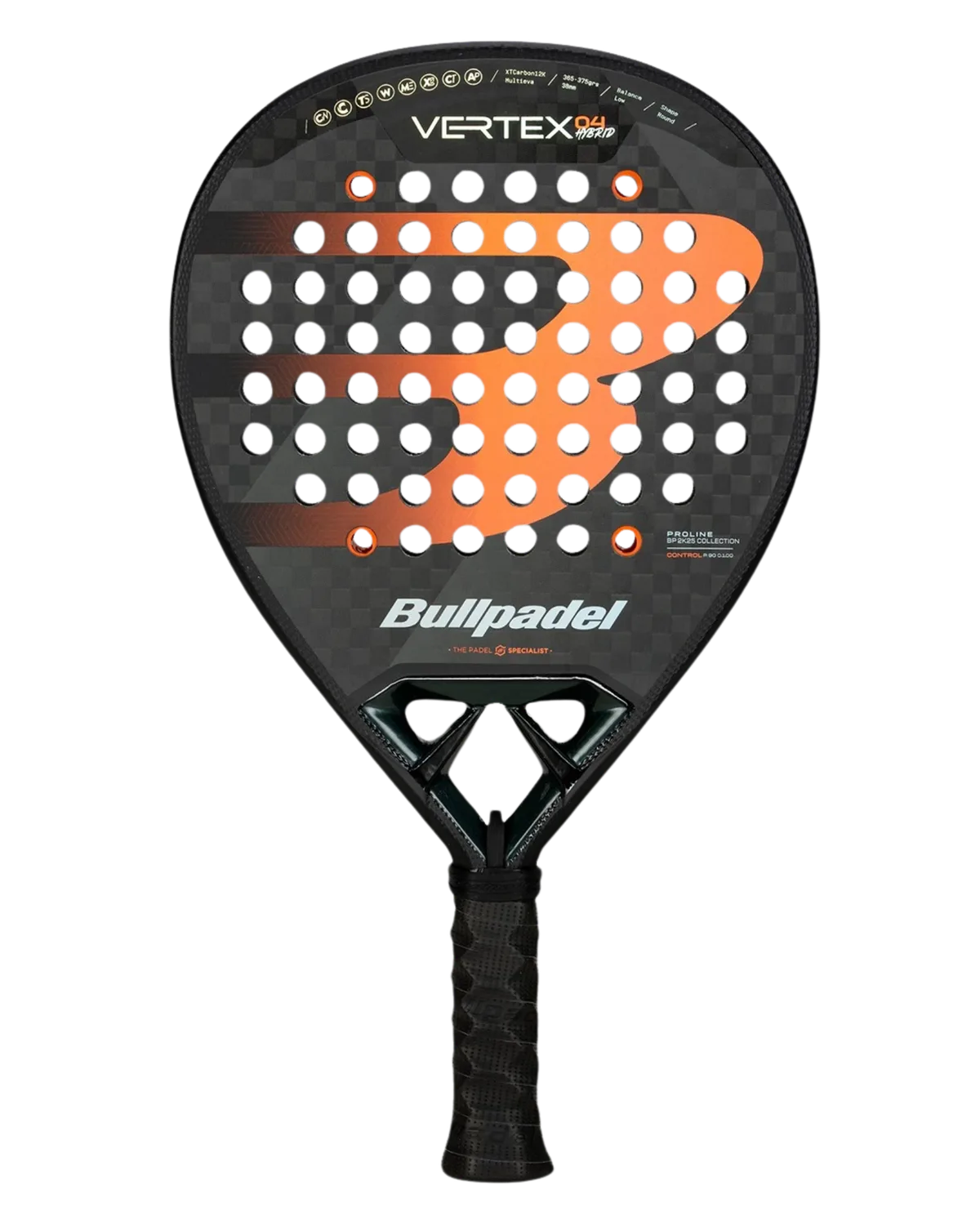
Best balanced Vertex option
Bullpadel Vertex 04 Hybrid
The Vertex feel with a friendlier shape for players who want power but still defend and counter often.
- Review
- 9.0/10
- Price
- $249.00
- Best for
- Players torn between control and power
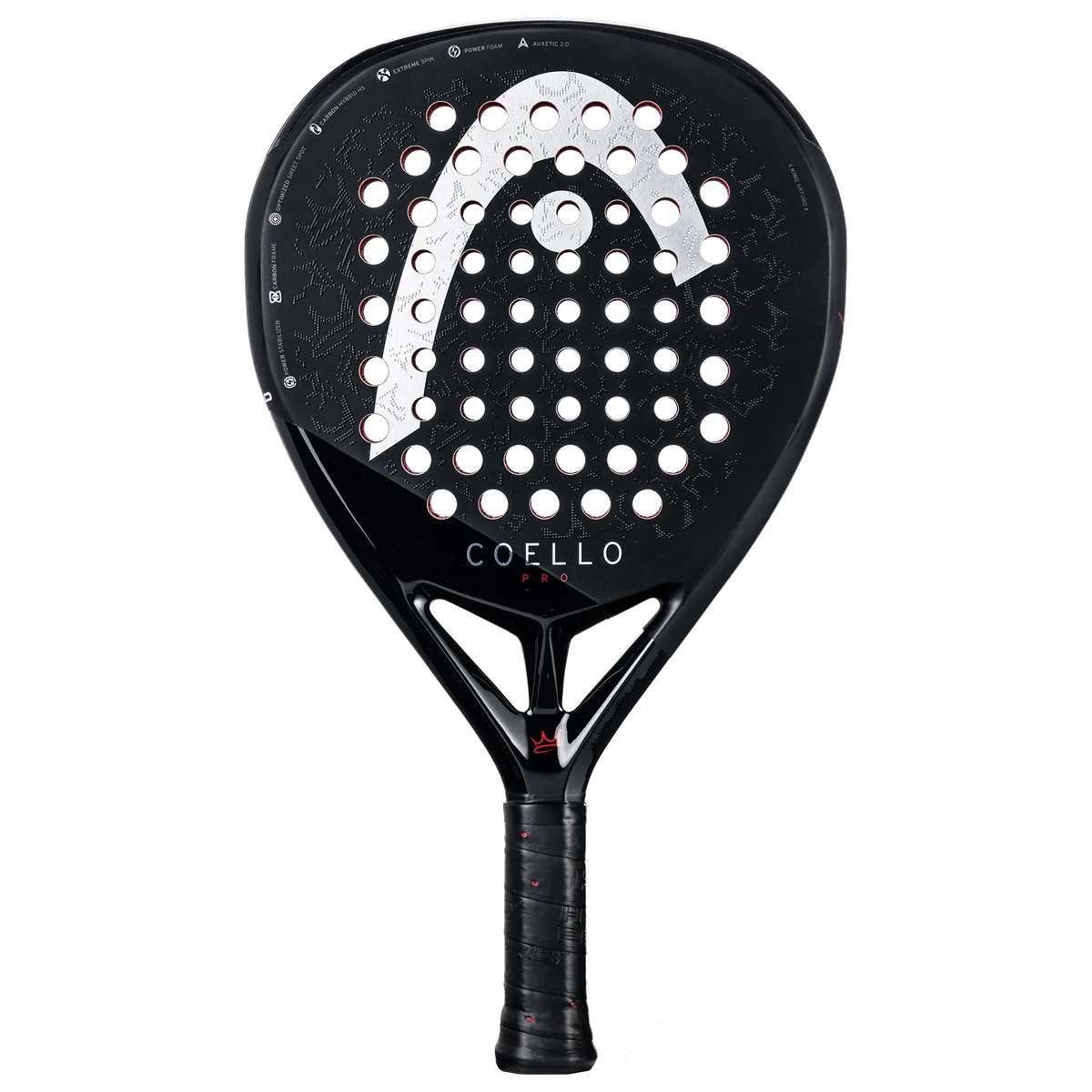
Best heavy finishing power
Head Coello Pro 2025
A pro-style power racket that feels built for players who already attack high balls cleanly.
- Review
- 9.0/10
- Price
- $249.99
- Best for
- Aggressive left-side players who step into overheads
Related Guides and Tools
Next step
best padel racket for control
Use this next if you want to turn the guide into a shortlist or a direct product decision.
Next step
Head Coello Pro vs Hack 04
Use this next if you want to turn the guide into a shortlist or a direct product decision.
Next step
Racket comparison engine
Use this next if you want to turn the guide into a shortlist or a direct product decision.
Padel racket balance explained FAQ
Is low balance better for padel beginners?
Often yes. Low balance keeps mass near the hand, which makes the racket easier to move so beginners can react, block, and learn compact padel swings. It is also gentler on the arm, which matters while you are building up match time.
Does high balance give more power?
High balance can give more leverage on overheads because extra mass sits toward the head. But that power only materializes if your timing and contact point are clean enough to use it; if your volleys are already late, high balance usually costs you more than it gives.
How is padel racket balance measured?
Balance is measured in millimeters from the butt of the handle to the point where the racket sits level on a fulcrum. Roughly, 255-263 mm is low, 264-270 mm is medium, and 276 mm and above is high. Higher numbers mean more weight toward the head.
Can I change a racket's balance myself?
Yes. A few grams of lead tape shifts the balance point without a new frame. Tape near the top of the head raises balance for power, while tape under the grip lowers it for speed and comfort. Add two to four grams at a time and test before adding more.
What balance should most intermediate players choose?
Medium balance, roughly 264-270 mm, is the safest place for most improving all-court players. It keeps the head quick enough for net exchanges while still offering some leverage on overheads, so you are not forced to specialize in either defense or attack too early.
Why do two rackets with the same weight feel different?
Because balance changes where that weight sits. A head-heavy 365 g racket puts mass toward the tip, so it feels slower and more powerful, while a head-light 365 g racket keeps mass near the hand and feels quicker. Always read weight and balance together, not separately.