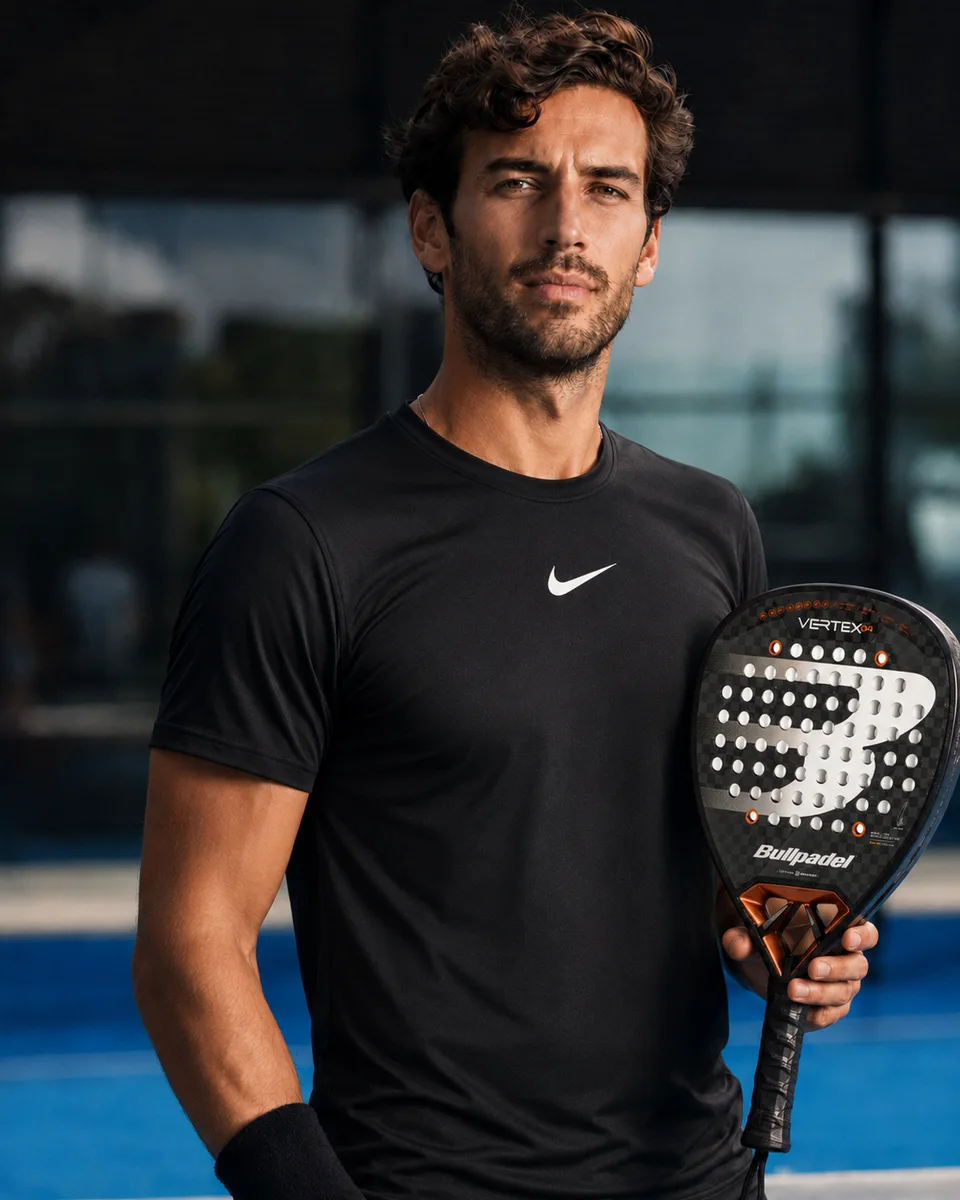
Wide feet padel shoe fit cues
| Fit clue | Why it matters | Good sign |
|---|---|---|
| Toe box room | Prevents pinching during split steps | Toes can spread without hitting the upper |
| Midfoot hold | Stops the foot from sliding inside the shoe | Foot feels locked when braking sideways |
| Upper flexibility | Helps the shoe adapt to a wider forefoot | No pressure hot spot after ten minutes |
| Outsole base | Adds confidence on lateral stops | Shoe feels stable without over-tightening |
| Thumb-width heel space | Confirms length is right, not oversized | One thumb behind the heel with laces loose |
Roomy does not mean loose
The right wide-foot padel shoe gives the forefoot breathing room while still holding the midfoot. If the whole shoe is loose, your foot can slide inside it when you defend the corner, and that inside-shoe movement quietly steals confidence on every hard stop.
That inside-shoe slide is different from court slip, but both feel bad. A worn or wrong outsole slides on the surface; a sloppy fit slides against the insole. Try to separate fit problems from traction problems before you replace the wrong item, because a wide-foot player who buys aggressive tread to cure a fit issue usually ends up frustrated twice. Our guide on why padel shoes slip walks through that diagnosis.
- Avoid shoes that pinch the outside toes during split steps.
- Avoid sizing up so much that the heel lifts.
- Use lacing to secure the midfoot before judging toe room.
- Test lateral stops, not just walking comfort.
How to measure your foot at home
You do not need a pro fitting to know if you run wide. Stand on a sheet of paper in the evening, when feet are at their largest, put your full weight down, and trace the outline. Measure the widest part of the forefoot in millimeters and the heel-to-toe length, then compare both to the brand size chart rather than guessing from your usual number.
Wide is usually a forefoot that measures noticeably broad relative to length. If your width sits near or past the top of a brand's regular range, you want a roomier last and a forgiving upper, not just a longer shoe. Do the trace for both feet; most players have one foot bigger, and you fit the larger one.
| Width feel | Approx. forefoot width | What to look for |
|---|---|---|
| Standard | Around 95-100 mm | Most regular-fit padel shoes work |
| Wide | Around 100-105 mm | Roomy last, soft upper, secure midfoot |
| Extra wide | 105 mm and up | Roomiest models, removable insole for volume |
Best starting points
I treat Babolat Jet Movea 2 and Head Motion Pro 1.5 as sensible starting points because their listed fit is regular to roomy. Babolat Sensa is another roomier women's option, and it is worth demoing before you commit.
That does not make any shoe a guaranteed wide-width model. It simply means those are better places to start than narrow, race-like court shoes built around a fast, low-volume foot. Order two sizes if the return policy allows, and keep the pair that holds your midfoot while freeing the toes. Our shoe surface guide covers matching the outsole to your court once fit is sorted.
| Player need | Look for | Avoid |
|---|---|---|
| Wide forefoot | Regular-to-roomy fit notes | Narrow speed shoes |
| Heavy corner defense | Stable base and midfoot hold | Loose heel fit |
| Hot spots near toes | Softer upper and more toe volume | Stiff upper pressing on pinky toe |
| High-volume foot | Removable insole to reclaim depth | Thin fixed footbed |
Lacing and insole tricks that reclaim room
Before you decide a shoe is too narrow, try the fit tools you already own. Swapping the stock insole for a thinner one drops the foot lower and reclaims forefoot volume, which is one of the quickest wide-foot wins. If a shoe has an extra eyelet at the top, use it for a heel-lock so you can leave the forefoot laces relaxed without the heel slipping.
Skipping the eyelet directly over a pressure hot spot lets that section of the upper spread while the rest stays snug. None of these fixes turn a genuinely narrow shoe into a wide one, but they routinely make a borderline regular-fit shoe comfortable for a wider foot.
- Swap in a thinner insole to gain forefoot depth.
- Use a heel-lock (runner's loop) so you can loosen the forefoot.
- Skip the eyelet over any toe or midfoot hot spot.
- Break new shoes in with short sessions before match play.
Break-in, care, and when to replace
A slightly firm upper often relaxes over the first two or three sessions, so give a promising shoe a short break-in before judging it. Play twenty to thirty minutes, note any hot spots, and only rule it out if the pressure is sharp rather than snug. Uppers give a little; outsoles and midsoles do not, so never buy a painful outsole hoping it changes.
Wide-foot players often wear the outer edge of the forefoot faster because that is where lateral braking loads the shoe. Watch the tread there and along the toe drag zone; when the pattern polishes smooth or the midfoot support feels tired, replace the pair. A dead shoe undermines a good fit just as much as the wrong size.
Care helps a roomier shoe last. Brush packed sand out of the tread so grip stays honest, keep the pair out of a hot car trunk where heat hardens the rubber, and rotate two pairs if you play several times a week so each dries fully between sessions.
Common wide-foot mistakes to avoid
The two mistakes I see most are buying longer to fix width and blaming the court for an inside-shoe slide. Sizing up adds width slowly but heel lift and toe-box slop quickly, which hurts the exact lateral stops padel lives on. Diagnose the real problem first, then match the shoe to it.
- Do not size up two full sizes to chase forefoot room.
- Do not ignore heel lift just because the toes feel great.
- Do not buy aggressive tread to mask a loose fit.
- Do not skip the return-window demo when width is uncertain.
Related Reviews
These are the reviews I would open next if this guide describes the decision you are trying to make.
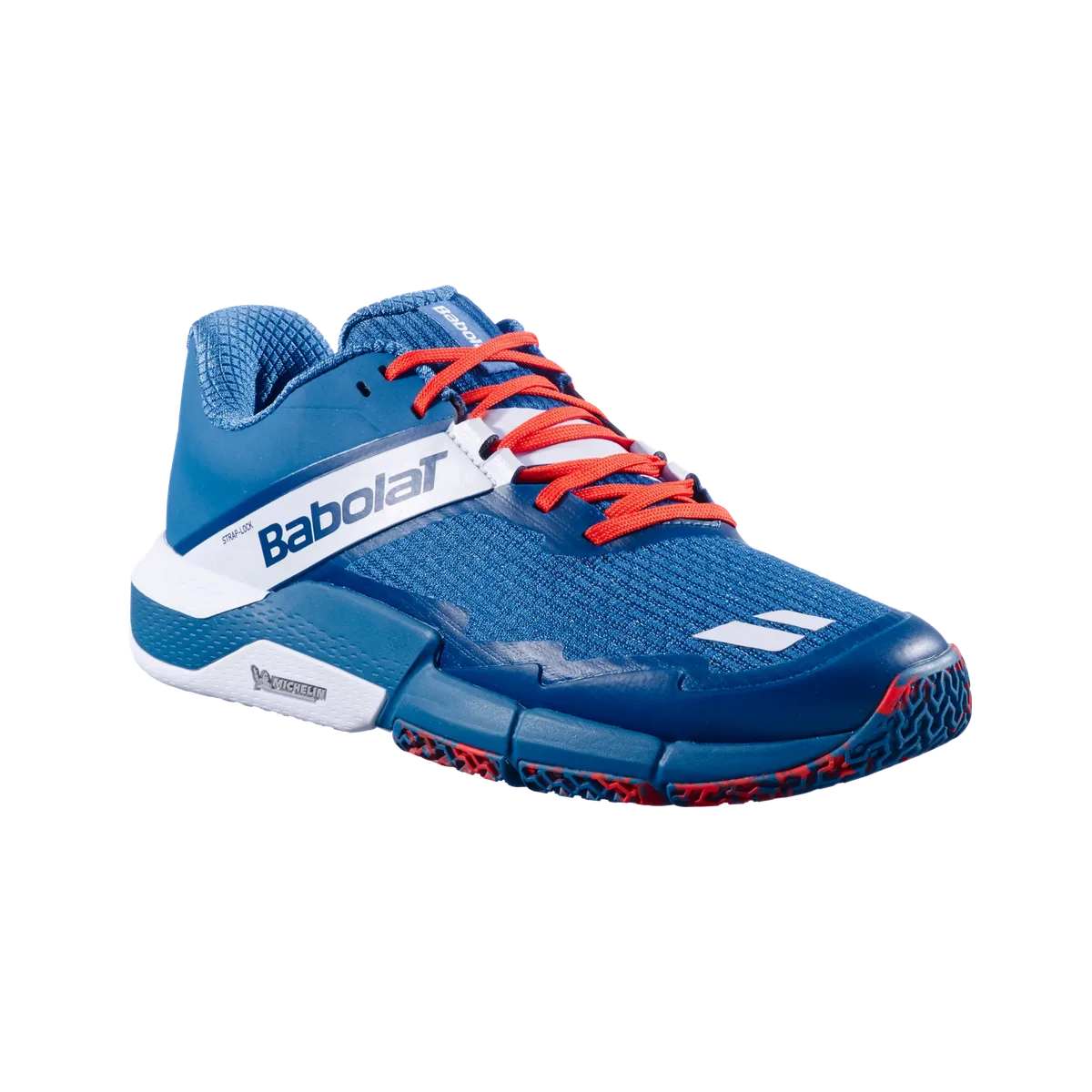
Tool-tested stability shoe pick
Babolat Jet Movea 2 Men's Padel Shoes 2025
A durable men's padel shoe for beginners who want a more planted feel.
- Review
- 8.4/10
- Price
- $149.00
- Best for
- A durable men's padel shoe for beginners who want a more planted feel.
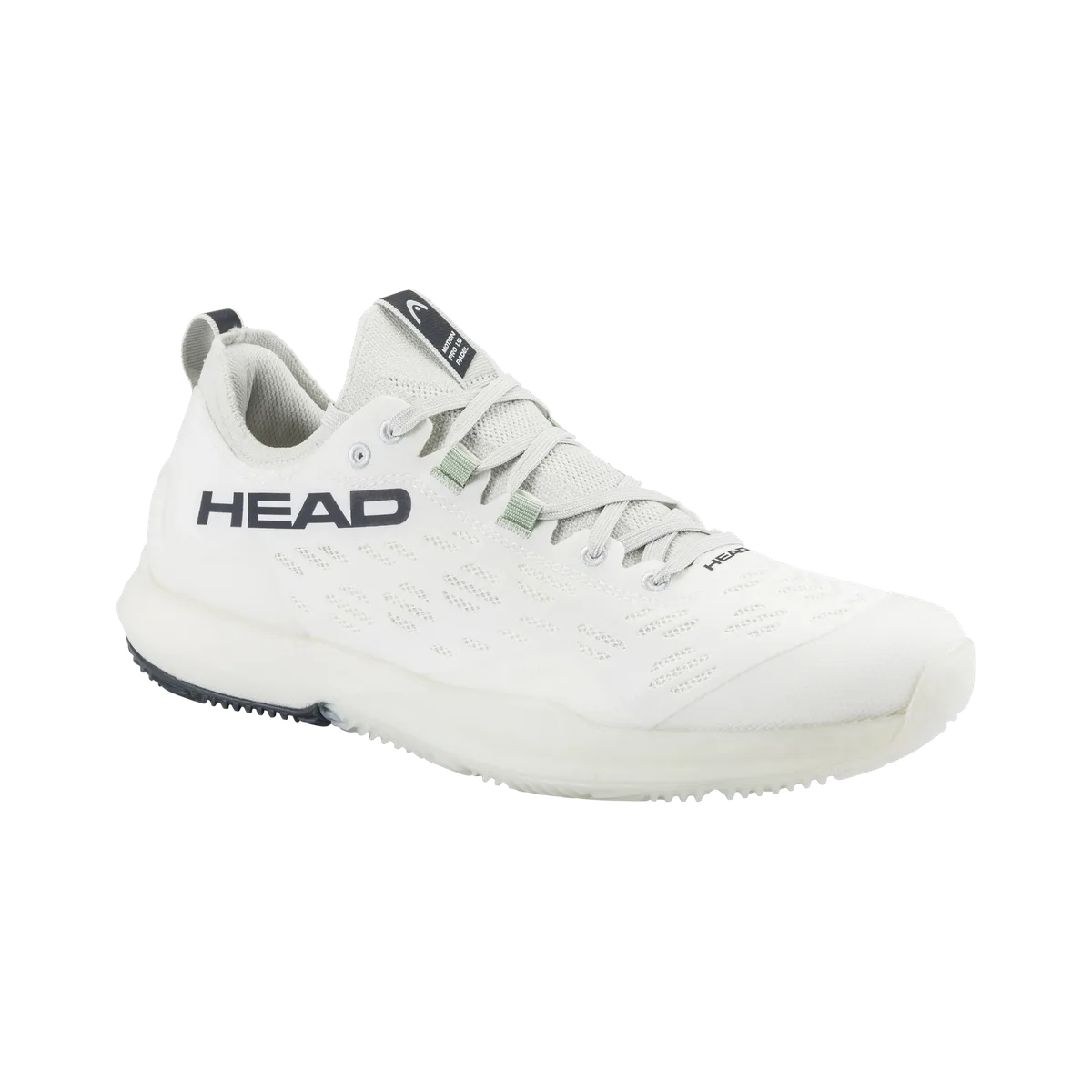
Tool-tested stability shoe pick
Head Motion PRO 1.5 Men Padel Shoes
A balanced men's padel shoe pick when stability and comfort matter.
- Review
- 8.4/10
- Price
- $129.00
- Best for
- A balanced men's padel shoe pick when stability and comfort matter.
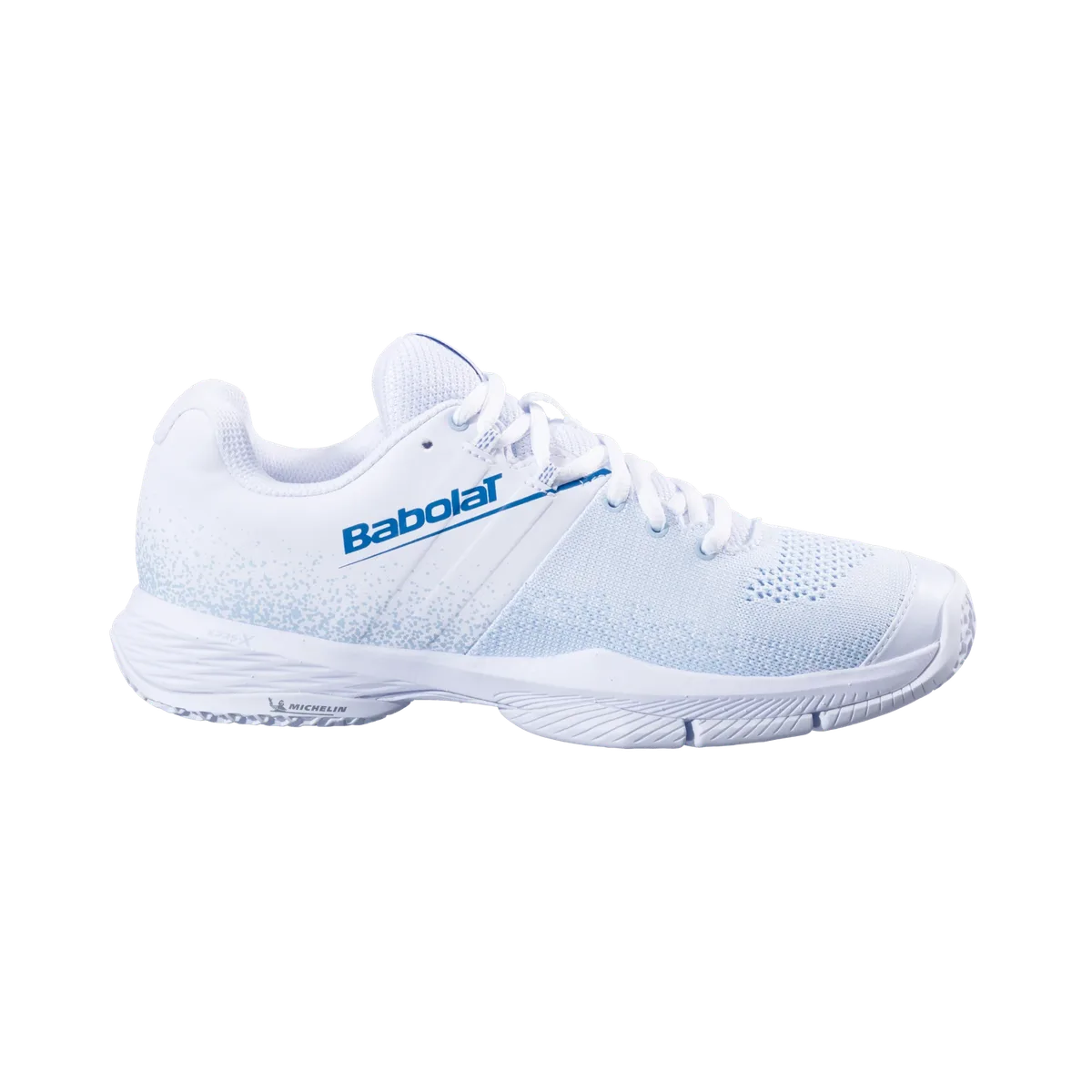
Tool-tested stability shoe pick
Babolat Sensa White/Cool Blue Women Padel Shoes
A comfort-oriented women's padel shoe for players who want support without a heavy feel.
- Review
- 8.4/10
- Price
- $125.00
- Best for
- A comfort-oriented women's padel shoe for players who want support without a heavy feel.
Related Guides and Tools
Next step
Best padel shoes for wide feet
Use this next if you want to turn the guide into a shortlist or a direct product decision.
Next step
Best padel shoes
Use this next if you want to turn the guide into a shortlist or a direct product decision.
Next step
Shoe finder quiz
Use this next if you want to turn the guide into a shortlist or a direct product decision.
Wide feet padel shoes guide FAQ
Are there true wide padel shoes?
Some padel shoes feel roomier, but many are not sold as true wide-width models. Players with wide feet should check toe box room, midfoot hold, and return options before committing.
Should I size up padel shoes for wide feet?
Sizing up can help toe pressure, but it can also create heel lift and lateral sliding. A roomier fit with secure midfoot hold is usually better than simply buying longer.
What padel shoe features help wide feet?
A roomier forefoot, forgiving upper, stable base, and secure lacing system help wide-foot players stay comfortable without losing support.
How do I know if I actually have wide feet?
Trace your foot on paper in the evening under full weight and measure the widest part of the forefoot. If that width sits near or above the top of a brand's regular size chart, you likely need a roomier last rather than a longer shoe.
Can I make a regular padel shoe fit wide feet?
Sometimes. A thinner insole reclaims forefoot depth, a heel-lock lacing keeps the heel down while the forefoot stays relaxed, and skipping the eyelet over a hot spot relieves pressure. These tricks help a borderline shoe but will not fix a genuinely narrow one.
Where do wide-foot padel shoes wear out first?
Usually the outer forefoot and toe drag zone, because lateral braking loads that edge. When the tread there polishes smooth or the midfoot support feels tired, it is time to replace the pair even if the upper still looks fine.